Burmese Temple Balestier History
Temple History Maha Sasana Ramsi Burmese Temple was initally located at 17 Kinta Road and was founded by U Thar Hnin in 1875. History The temple is founded by Venerable See Fatt Kuan.

Burmese Buddhist Temple Singapore Wikiwand
The Balestier Roads Chinese temple albeit relatively small in size and stature compared to other Chinese temples in Singapore has a long history that dated back to the mid-19th century.
Burmese temple balestier history. The area was named after Joseph Balestier the then colonys first American consul from 1837 to 1852 and the owner of a 1000 acre sugar plantation called Balestier Plain. As new settlers populated Balestier Road from the late 19th century they established villages and grew crops such as taro was grown. This temple serving Singapores Burmese Buddhist community was completed in 1991.
The temple was first located off Serangoon rd and was moved to this current location in 1990. Hence founding this temple. In the hope of spreading Buddhism to Singapore U Kyaw Gaung a Burmese traditional physician selected and transported a huge piece of rock to Mandalay where the statue of the Buddha was carved by skilled craftsmen there.
A stones throw away from the Sun Yat Sens Memorial hall lies the Maha Sasana Ramsi Burmese Buddhist temple. The temple was first located off Serangoon rd and was moved to this current location in 1990. In addition Tai Pei Yuen Temple has monthly blessing sessions as well as blessing sessions on Sunday.
The Kinta Road temple was a place of worship for the local Burmese Buddhist community until the mid. The development of the land into a plantation brought with it labourers of many backgrounds who settled in the area. Venerable See Fatt Kuan was born in 1927 in the Chinese village of Pang Yu in Kwangtung.
3 Traditional Architecture and Nostagialiciousness Shophouses terrace houses temples etcetera. Balestier was in Singapore between 1834 and 1852 and was a botanist and agriculturist. It was founded by a Burmese named U Thar Hnin also known as Tang Sooay Chin in 1875.
Wealthy individuals and families began moving into the area from the late 19th century onwards turning. Balestier hired a number of immigrants on his estates. This single storey temple was built in 1847 by the Chinese Hokkien labourers working on Joseph Balestiers sugar plantation.
I had no idea we had a burmese budhhist temple at balestier road. Balestier owned a huge 1000-acre sugar cane and cotton plantation and today Balestier Road runs alongside his former estate. It was published in the Government Gazette dated April 12 1985 and date of registration of Burmese Temple at 17 Kinta Road as 2ndApril 1985.
Balestier Road was named after Joseph Balestier who first developed the area in 1834 when he leased 1 000 acres of land for a sugarcane. When she was born she was given the name Poon Sin Kiew. I was struck by the gleaming gold details and the towering size of the statue of Buddha.
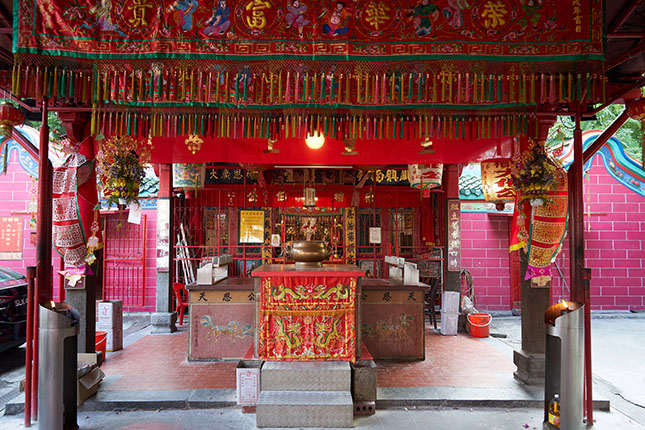
Goh Chor Tua Pek Kong Temple was established in 1847 by Hokkien workers who were employed at a sugar cane estate owned by Joseph Balestier the first American Consul to Singapore from 1836-52. Sasanaramsi Burmese Buddhist Temple is the only Buddhist temple outside of Myanmar built in traditional Burmese architectural style. Maha Sasanaramsi Burmese Buddhist Temple This temple serving Singapores Burmese Buddhist community was completed in 1991.
The Burmese connection to Balestier is unclear. He wanted to spread Theravada Buddhism in Singapore. Goh Chor Tua Pek Kong Temple.
Interestingly even though Balestier has many Burmese-themed roads Balestier was not a place or town in Burma. Named Goh Chor Tua Pek Kong Temple it was established in 1847 by the Hokkien labourers working at the vicinitys sugarcane plantations. Long history being merged with Burmese Tradition Temple has a lot to offer for you to see and appreciate.
It was originally establised in 1878 at Kinta Road off Serangoon Road but moved to its current location after the. Mr Balestier developed a large sugar plantation which he called Balestier Plain. It was originally establised in 1878 at Kinta Road off Serangoon Road but moved to its current location after the original site was earmarked for redevelopment.
In 1986 the resettlement department of Housing and Development Board offered a new site at Tai Gin Road with an area of 24142 square meters. In 1878 he donated the temple to U Kyaw Gaung a Burmese. Maha Sasanaramsi Burmese Buddhist Temple was completed in 1991 and serves Singapores Burmese Buddhist community.
This French-born planter and merchant was the first US Consul to Singapore serving from 1837-1852. Some believe that it was because a respected Burmese resident used to live in the area while others thought it was because of how close the area was to this temple Maha Sasanaramsi Burmese Buddhist Temple. Amidst the HDB flat and condos many home furnishings stores dealing in light fixtures and home interior décor are commonly found here.
This was once a swampland stretching all the way to todays Toa Payoh Estate before it was drained and cleared in the mid-1800s. Located in the central region of Singapore Balestier refers to the area around Balestier Road that runs between Thomson and Serangoon roads. Balestier at the time was a swampy area infested with tigers and malarial mosquitoes.
The area was named after him as it was where his plantation was located. Jiahui I had no idea we had a burmese budhhist temple at balestier road. This Burmese temple was actually founded by U Kyaw Gaung in 1921 when he brought in from Mandalay a 10-tonne 11 feet high marble scupture of teh Buddha.
The temple was originally established in 1878 at Kinta Road off Serangoon Road by a Burmese named U Thar Hnin also known as Tang Sooay Chin. This Burmese temple was actually founded by U Kyaw Gaung in 1921 when he brought in from Mandalay a 10-tonne 11 feet high marble scupture of teh Buddha. Balestier was first developed as a sugarcane plantation in the mid-19th century by American Joseph Balestier.
Highlight of the Temple The place is built with the objective of providing a safe and friendly space for nurturing holistic well-being while helping people with spiritual growth and the path to free from suffering.

Entrance Of Shwe Dagon Pagoda History Of Myanmar Thailand Art Myanmar Art


Comments
Post a Comment